

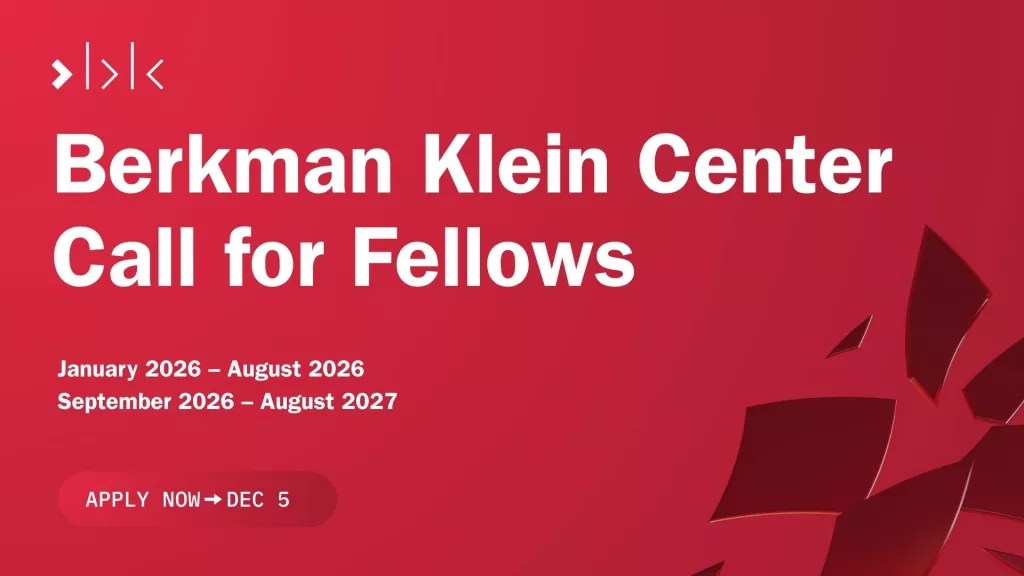
Applications are now open for the Berkman Klein Center Fellowship 2026 at Harvard University — a unique opportunity for scholars and practitioners to research the ethics, governance, and impact of artificial intelligence. Apply by December 5, 2025.
What Is the Berkman Klein Center Fellowship 2026?
The Berkman Klein Center for Internet & Society (BKC) at Harvard University has officially opened applications for its prestigious Berkman Klein Center Fellowship 2026 program. This fellowship welcomes researchers, academics, technologists, and practitioners who want to explore the intersection of artificial intelligence, ethics, technology governance, and society.
Since its founding in 1996, BKC has been a global leader in interdisciplinary research that shapes the digital age. Its fellowship program stands out for combining academic excellence with real-world impact, encouraging innovative ideas that address how AI and the Internet influence human life, policy, and law.
Program Overview and Fellowship Tracks
The Berkman Klein Center Fellowship 2026 offers two distinct fellowship periods:
Applicants can choose one or apply for both periods. While fellows are strongly encouraged to be in residence in Cambridge, Massachusetts, remote arrangements are considered case-by-case.
Fellows will collaborate within Harvard’s interdisciplinary ecosystem — engaging with students, faculty, and other experts — to advance the public interest mission of the Center. The fellowship supports both technical and non-technical research, from developing AI systems to studying their ethical and social implications.
Research Priorities for the 2026 Fellowship
The 2026 cohort will focus on five key areas aligned with BKC’s research agenda:
-
Agentic AI – Investigating autonomous AI systems that act independently and how to ensure accountability and human protection.
-
Language Model Interpretability – Exploring why AI models behave as they do and developing transparency tools for policymakers and researchers.
-
Benchmarking AI Systems Beyond Intelligence – Designing new benchmarks that evaluate AI agency, identity, and awareness, not just performance.
-
AI and the Human Experience – Studying how AI affects creativity, emotion, spirituality, and the essence of human relationships.
-
Bridging the AI Triad – Bringing together accelerationists, safetyists, and skeptics to foster balanced, constructive dialogue on AI’s future.
These themes reflect BKC’s interdisciplinary mission to bridge technology, law, humanities, and social sciences — creating a holistic understanding of AI’s role in society.
Eligibility and Who Should Apply
The Berkman Klein Center Fellowship 2026 is open to both academics and practitioners from around the world.
Ideal candidates include:
-
Scholars (post-docs, professors, or researchers) with experience in technology, policy, or social sciences.
-
Practitioners from industry, government, or civil society who have demonstrated leadership in technology and public interest work.
-
Technical researchers with expertise in Python, PyTorch, or AI/ML frameworks who can contribute to open-source AI infrastructure.
Applicants should have a proven record of contributing to public or scholarly discourse and a commitment to advancing the ethical development of technology.
Funding, Benefits, and Support
Selected fellows may receive up to $75,000 USD per year (equivalent to $6,250 per month) depending on need and funding availability. The program also offers:
-
Shared office space at Harvard Law School
-
Access to Harvard Libraries and resources
-
Opportunities to audit classes or teach at Harvard (case-by-case)
-
A dynamic, collaborative community engaged in open and public-interest research
International applicants are welcome. Harvard’s International Office supports eligible fellows with visa sponsorship.
How to Apply for the Berkman Klein Center Fellowship 2026
Applications are open until Friday, December 5, 2025, at 11:59 p.m. ET.
To apply, candidates must complete the official application form and upload:
-
Curriculum Vitae (CV)
-
1–2 page Cover Letter outlining motivation and goals
-
2–3 page Project Proposal aligned with one or more of BKC’s research priorities
-
1–3 Work Samples (PDF) relevant to the proposed project
-
Two Professional References (name and contact information)
All documents must be submitted in PDF format, each under 5 MB.
Why Apply to the Berkman Klein Center Fellowship 2026
Joining the Berkman Klein Center means becoming part of a world-renowned community shaping the future of technology and society. Fellows benefit from an environment that values interdisciplinary dialogue, open collaboration, and actionable outcomes.
Whether developing new AI interpretability tools, exploring human-AI coexistence, or designing legal frameworks for intelligent systems, fellows will directly contribute to the ethical and sustainable governance of AI.
Important Dates and Application Link
Final Note
The Berkman Klein Center Fellowship 2026 is more than a research program — it is a platform for collaboration, innovation, and the advancement of technology in the public interest. Scholars and practitioners passionate about AI ethics, governance, and human-centered innovation are encouraged to apply.
For more international career opportunities, visit Opportunities For Youth.
Related
Discover more from Opportunities for Youth
Subscribe to get the latest posts sent to your email.





Leave a comment