
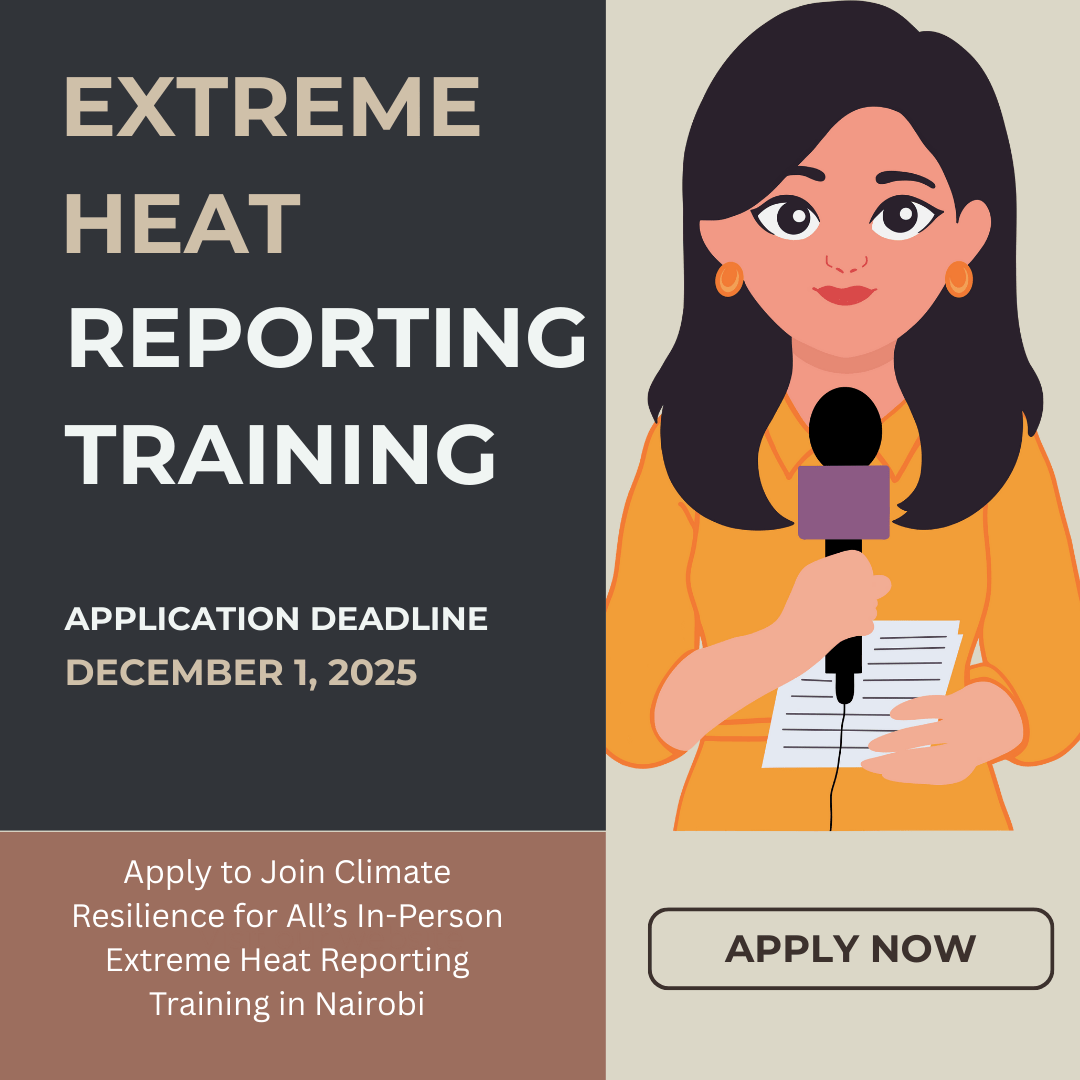
Climate Resilience for All (CRA) is now accepting applications for its in-person Extreme Heat Reporting Training, scheduled to take place in Nairobi, Kenya, from January 26–28, 2026. This program marks the third regional training under CRA’s initiative to strengthen climate journalism across East Africa, with a special focus on the rising threat of extreme heat. Participants selected for this training will also become CRA Extreme Heat Journalism Fellows.
As extreme heat events intensify across the region—impacting health, agriculture, infrastructure, and daily life- journalists play a crucial role in explaining these impacts to the public. This training aims to equip reporters with the knowledge, tools, and techniques needed to cover extreme heat accurately, compellingly, and consistently.
About the Climate Resilience for All Training
This three-day, in-depth, and interactive program is designed to help journalists develop a strong grounding in the science, social dimensions, and human impacts of extreme heat. Through a blend of expert lectures, case studies, hands-on exercises, and peer discussions, participants will explore how to report on heat-related issues in ways that are both accessible and impactful.
During the training, journalists will:
-
Build a deeper understanding of extreme heat—including its health consequences, its connections to climate change, and how it disproportionately affects vulnerable groups such as low-income communities, informal workers, women, and children.
-
Discover credible sources and new reporting angles, using data, scientific research, expert interviews, and community insights to enrich their storytelling.
-
Integrate heat coverage into their existing reporting beats, whether they focus on health, agriculture, economics, environment, or human interest stories.
-
Strengthen their use of visuals, learning how to incorporate satellite imagery, data visualizations, photography, and other visual tools to communicate the severity and scale of extreme heat.
-
Participate in practical exercises, including story mapping, role-playing interviews, field-based case analyses, and visual storytelling labs.
The sessions will be facilitated by experienced climate journalists and heat specialists, ensuring participants receive professional guidance based on real-world reporting, regional context, and global climate trends.
Who Can Apply?
This training is open to:
-
English-speaking staff or freelance journalists
-
Based in any of the following countries: Kenya, Tanzania, Uganda, Ethiopia, Rwanda, Burundi, South Sudan, or Somalia
-
With a minimum of one year of reporting experience
Journalists from diverse media backgrounds—including print, radio, television, and digital platforms—are encouraged to apply. Applicants should demonstrate an interest in climate reporting or a willingness to incorporate environmental issues into their regular reporting work.
What the Fellowship Covers
Selected journalists will receive full support to enable their participation in the training. CRA will provide:
-
Free access to the full three-day training
-
Travel support to and from Nairobi
-
Accommodation and meals during the training period
-
Childcare support, ensuring that women journalists with caregiving responsibilities can participate fully
This support is designed to remove financial and logistical barriers that might otherwise prevent journalists from attending.
Why This Training Matters
Extreme heat is quickly becoming one of the most severe climate risks in East Africa. However, it remains underreported, misunderstood, or overlooked in daily news coverage. By participating in this training, journalists will gain the tools to elevate public understanding of heat risks and highlight the lived experiences of communities who are already feeling the effects.
Participants will also join a growing regional network of climate journalists, opening pathways for collaboration, cross-country story projects, mentorship, and continued learning even after the training ends.
Important Dates
-
Application Deadline: December 2, 2025
-
Notification of Accepted Participants: December 19, 2025
-
Training Dates: January 26–28, 2026
For journalists eager to strengthen their climate reporting expertise, this training offers a comprehensive, well-supported, and regionally relevant opportunity to build new skills and deepen their impact.
How to Apply
Submit your application using the link below:
This is a valuable opportunity to sharpen your climate reporting skills, gain deeper insight into extreme heat impacts, and connect with journalists from across the region.
To know more about such opportunities, click here.
Related
Discover more from Opportunities for Youth
Subscribe to get the latest posts sent to your email.












Leave a comment